Sweden’s New Parliamentary Majority Holds the Line Against EU Nicotine Tax Deal
05th Nov 2026
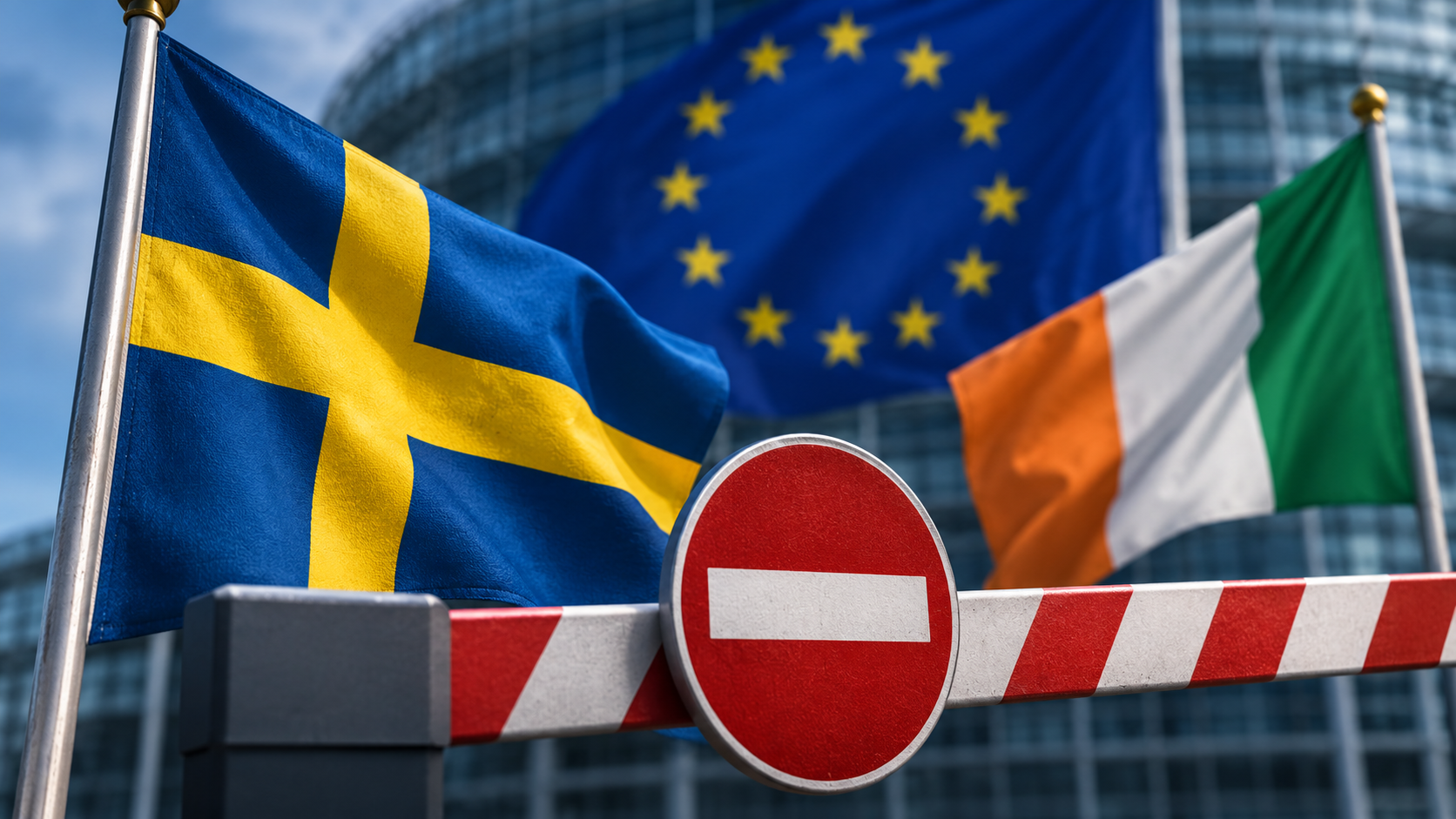
Sweden’s political landscape has changed, but its opposition to Brussels’ proposed nicotine taxes remains. Despite a new centre-left parliamentary majority, the country is maintaining the previous government’s negotiating position, threatening to derail Ireland’s EU Presidency as it pushes for a deal on tobacco taxation.
The European Union is approaching a decisive moment in its negotiations over the Tobacco Excise Directive (TED).
Ireland, which currently holds the rotating EU Council Presidency, wants finance ministers to reach an agreement on 9 November. But Sweden remains opposed to the proposed minimum tax on nicotine pouches.
The political situation makes the dispute particularly significant. September’s election produced a new centre-left majority in the Swedish parliament, but no new government has yet taken office.
Instead, the outgoing administration remains in place, and its negotiating position continues to shape Sweden’s response in Brussels.
A new majority, but the same red line
Sweden has consistently argued that EU countries must retain the freedom to tax nicotine products according to their relative health risks. The position was established before the election and remains central to the government’s latest negotiating mandate.
In its official briefing ahead of the 9 November meeting, the Swedish government states that taxing nicotine pouches at the same minimum level as certain smoking tobacco products is unacceptable.
The new majority, also insists that countries wishing to differentiate taxes according to relative product risks must remain free to do so.
“The previous government established a clear negotiating position, and the new parliamentary majority respect that position. Countries that choose to tax nicotine products according to their relative health risks must be free to do so. I urge the Irish Presidency to return with a new proposal before the end of the day – one that respects Sweden’s position and allows member states to pursue risk-based taxation policies,” says Markus Lindblad, Head of Legal and External Affairs at Haypp Group.
The distinction matters because Sweden already applies different tax rates to cigarettes, traditional snus and tobacco-free nicotine pouches.
Ireland faces a Swedish veto
The Irish Presidency has spent months trying to secure an agreement on revised EU tobacco taxes.
Its latest compromise lowers the proposed minimum tax on nicotine pouches compared with earlier drafts. But the revised rates would still require Sweden to move away from its current approach.
For Ireland, the problem is straightforward: EU tax legislation requires unanimous agreement. A single member state can therefore prevent the entire package from being adopted.
Sweden’s continued opposition puts the planned agreement at risk, even if the other 26 member states are prepared to support it.
A dispute over public health policy
The European Commission argues that higher minimum tobacco taxes can support public health objectives, reduce differences between national tax systems and strengthen the internal market.
Sweden’s objection concerns the treatment of products with different risk profiles.
Nicotine is addictive, and smokeless nicotine products are not risk-free. However, the health risks associated with combustible cigarettes differ substantially from those of non-combustible products.
Sweden’s position is that taxation should be able to reflect those differences rather than imposing minimum rates that undermine national risk-based policies.
The dispute is therefore about more than the price of nicotine pouches. It concerns how much freedom EU member states should retain when designing their own public health and taxation policies.
The next test comes on 9 November
Ireland has kept the tobacco tax package on the agenda for the upcoming meeting of EU finance ministers.
Sweden’s latest official position makes clear that the government cannot support the proposed agreement.
The new parliamentary majority has not yet resulted in a change of government or a reversal of Sweden’s established negotiating position.
Unless a further compromise emerges, Sweden could prevent the Irish Presidency from securing the agreement it has been seeking.
The central question is whether Brussels can find a solution that allows member states to maintain tax policies reflecting differences in product risk.