EU Pulls the Emergency Brake as Austria Pushes to Ban Disposable Vapes
21st Apr 2026
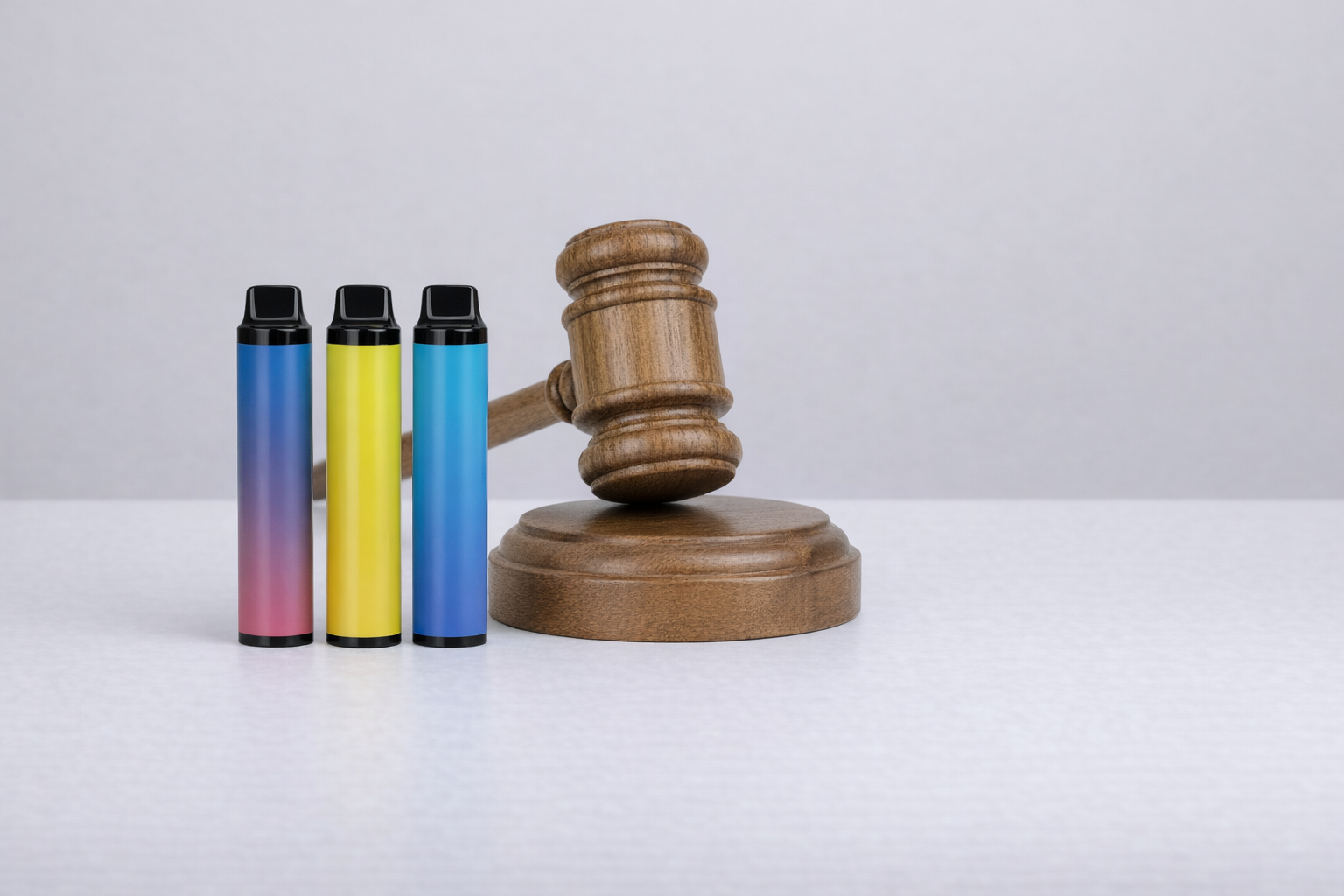
As Austria moves to go almost further than any other EU country by banning disposable vapes, the European Commission and Sweden are now calling a halt – at least for now. In an unusually sharp opinion, Brussels warns that the Austrian proposal risks undermining the EU’s common regulatory framework and further fragmenting nicotine regulation across Europe.
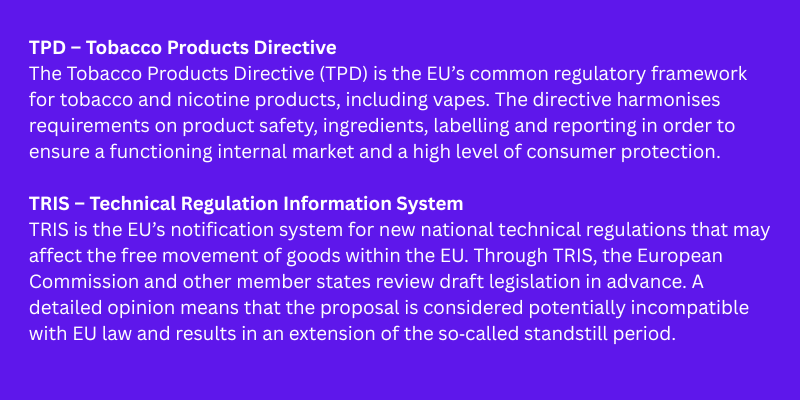
Via the EU’s TRIS system, the Commission has issued a so‑called detailed opinion after Austria submitted a draft law that not only bans disposable vapes but also extends ingredient restrictions to nicotine‑free e‑liquids. The problem? The EU already has harmonised rules for vaping products under the Tobacco Products Directive (TPD).
National Symbol Politics Collide with EU Law
The European Commission’s criticism is unambiguous. Parts of the proposal, it says, concern areas that are already harmonised at EU level. In other words, Austria is trying to micromanage rules that EU member states have already agreed on collectively.
“This is yet another example of national symbol politics that risks tearing apart the internal market,” says Markus Lindblad, Head of External Affairs at Pouch Patrol.
“When rules diverge between countries, the result is weaker consumer protection, less transparency and more regulatory grey zones.”
Unclear What Is Actually Being Banned
According to the Commission, one of the most problematic aspects is Austria’s failure – or unwillingness – to clearly define what actually qualifies as a “disposable vape”. Brussels is demanding clarification to avoid arbitrary enforcement or direct conflict with EU law.
“Bans without clear definitions are a classic recipe for legal chaos,” Lindblad says.
“They open the door to arbitrariness and legal uncertainty – exactly what EU legislation is meant to prevent.”
The EU Hits the Brake
Because the Commission has issued a detailed opinion, the so‑called standstill period has been extended. This means Austria cannot adopt the law before 30 June 2026 at the earliest. Until then, the country must either retreat, rewrite the proposal – or explain why EU‑wide rules should be overridden.
Sweden has backed the Commission in the process, sharing the assessment that the proposal raises serious legal concerns.
“The TRIS system exists to stop precisely these kinds of national solo runs. EU cooperation loses its meaning if every country introduces its own bans without respect for common frameworks,” Lindblad argues.
A Familiar Pattern
Austria is far from alone. Across the EU, member states are increasingly pushing through rapid bans and sweeping restrictions, often without weighing the consequences for harm reduction, illicit markets or smokers looking for less harmful alternatives.
The question now is whether the EU is finally prepared to draw a line – or allow the patchwork of national bans to keep growing.