Australia and New Zealand tried different models. Only one worked.
18th Sep 2026

As the EU prepares its next major tobacco and nicotine legislation, there are two countries Brussels should study more closely. Australia and New Zealand chose very different paths. The results could hardly be more different.
As the third version of the EU Tobacco Products Directive, TPD3, gets closer, pressure is growing from countries and organisations that want stricter rules, more bans and higher taxes on nicotine products. In other words, they want Europe to follow the same path Australia has already taken. But is that really wise?
At the same time, New Zealand chose a harm reduction approach and has managed to push smoking down to historically low levels by encouraging smokers to switch to less harmful alternatives. Australia, meanwhile, has become a warning example of how well-meaning policy can create very different problems from the ones it was meant to solve.
Two countries, two strategies
Australia and New Zealand had the same ambition: to reduce smoking.
But while Australia focused on making nicotine products increasingly difficult to access, New Zealand focused on smoking itself.
Australia built its strategy on very high tobacco taxes, strict restrictions on vaping products and limited access to alternative nicotine products. New Zealand instead gave adult smokers access to regulated alternatives while continuing to fight cigarettes.
The results show why that difference matters.
When the state loses control
At the Global Tobacco & Nicotine Forum in Lisbon, Theo Foukkare, CEO of the Australian Association of Convenience Stores, presented a picture that should make every European policymaker stop and think.
According to Foukkare, around 80 percent of Australia’s tobacco consumers now buy their products on the illegal market. For vaping products and nicotine pouches, the figure is said to be as high as 97 percent.
At the same time, organised crime has grown around the trade. The presentation described more than 300 firebombings, several murders and widespread extortion linked to the illegal nicotine market. The black market has become so profitable that, according to Foukkare, it is worth more to criminal networks than the five largest illegal drug markets combined.
It is hard to see this as a public health success. The problem did not disappear. It moved. Australia illustrates a basic economic reality: when demand remains but legal alternatives become too expensive or too difficult to access, a vacuum is created. Someone will fill that vacuum.
In Australia, a legal pack of cigarettes costs around 50 Australian dollars, while illegal alternatives are sold for between 12 and 15 dollars. The result is that consumers have left the regulated market on an unprecedented scale.
That is also why authorities have had to close more than 1,000 illegal shops and invest hundreds of millions of dollars in law enforcement. When the state has to chase thousands of illegal outlets, it has already lost a large part of its control.
Europe has already seen the warning signs
This is not only an Australian problem. In France, bans and tougher restrictions have helped create one of Europe’s largest black markets for nicotine products. Illegal trade is now estimated to account for up to 28 percent of the tobacco market, while the state loses billions of euros in tax revenue every year. At the same time, smoking remains common in the country. Just over 16 percent of people in France still smoke daily.
Despite this, many European policymakers continue to argue for the same type of measures. That should worry everyone who wants evidence-based policy.
New Zealand shows there is another way
While Australia has struggled with a growing black market, New Zealand has become an international example of how harm reduction can help reduce smoking faster.
The difference is not that New Zealand has been less ambitious. The difference is that the country focused on reducing cigarette use rather than treating all nicotine products in the same way.
That is exactly the principle several public health experts are now calling for in Europe. It means regulation should be proportionate to the risk of each product and should primarily help adult smokers move away from cigarettes.
This is what TPD3 is really about
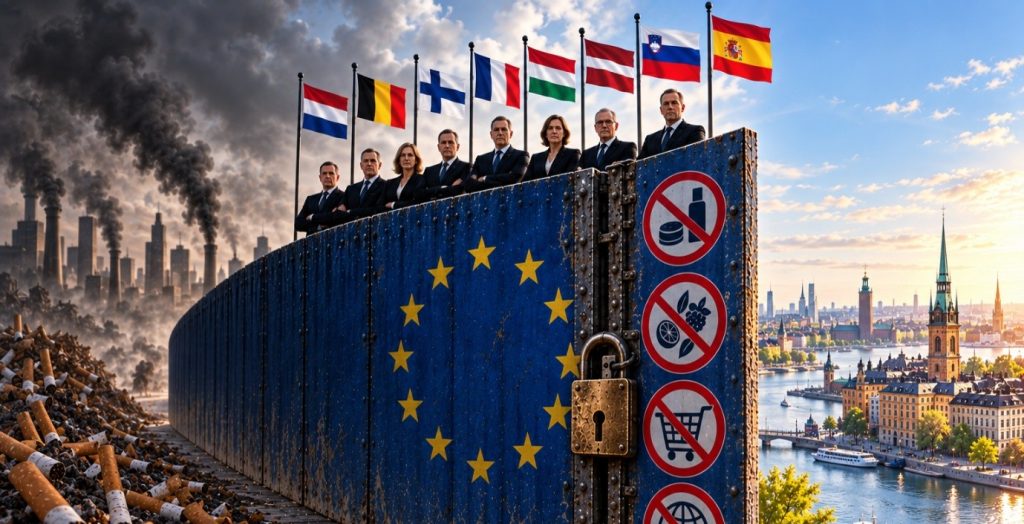
The debate in Brussels is often described as a technical discussion about nicotine pouches, flavours, product requirements or tax levels. But in reality, TPD3 is about something much bigger. It is about which path Europe chooses: the path where official sales are pushed down through bans, restrictions and ever-higher taxes, and where the black market grows.
Or the path where the goal is to help people stop smoking by making less harmful alternatives available, regulated and attractive. Australia shows what can happen when policy focuses more on reducing total nicotine use than on reducing cigarette use. New Zealand shows what can happen when the focus is on reducing the real health risks.
Europe’s choice
As Brussels now shapes TPD3, the question should be simple. Does the EU want to become more like New Zealand or more like Australia? If the goal is to reduce smoking, the answer is already there. If the goal is instead to create more opportunities for the black market, Australia has already written the playbook.