Breakthrough for nicotine pouches in the EU – but Malta blocks historic tax deal
11th Nov 2026
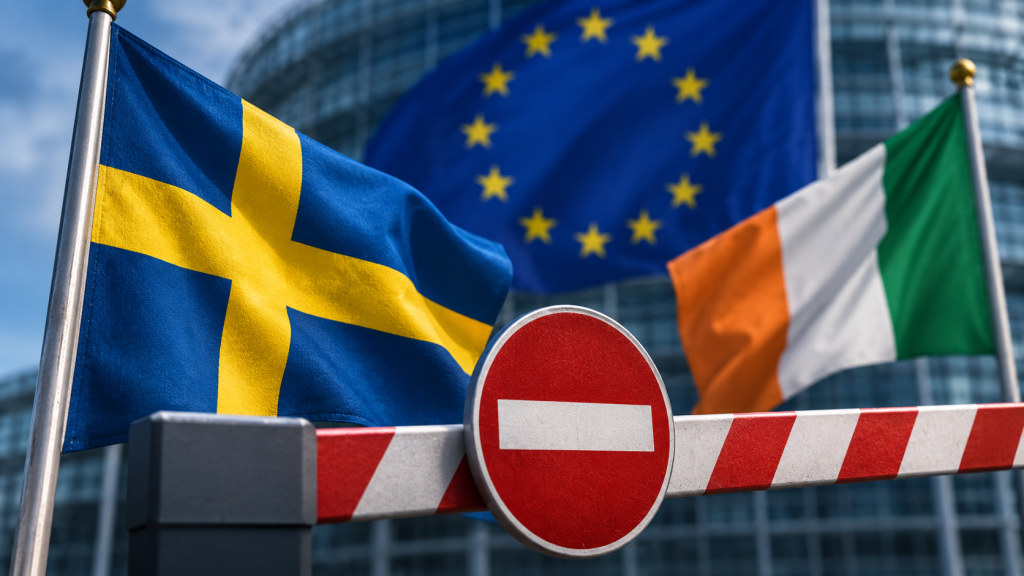
The EU is close to giving nicotine pouches their own place in the Union’s common tax system – without at the same time setting a minimum tax. That is the outcome of a compromise that 26 of 27 member states backed at the ECOFIN meeting on 9 November. But Malta said no and halted the agreement. The fight over the future of nicotine taxes in Europe now continues.
After months of tough negotiations, EU finance ministers have taken a major step towards a new framework for tobacco and nicotine taxation.
According to reports from the negotiations, the Irish compromise means that nicotine pouches will be covered by the EU’s harmonised excise duty system for the first time. The decision on a common minimum tax, however, is to be postponed.
This is a significant change from the European Commission’s original proposal, which included a minimum tax of up to EUR 143 per kilo of nicotine pouches.
For advocates of smoke-free nicotine alternatives, the compromise is a step forward in principle. The EU could recognise nicotine pouches as a distinct product category within the tax system, without immediately introducing a common tax level.
But nothing has been decided yet. Malta was the only member state that could not accept the compromise at the ECOFIN meeting in Brussels.
Nicotine pouches get their own place in the EU tax system
Until now, nicotine pouches have lacked a separate category in the EU’s harmonised tobacco taxation. This has meant that member states have been free to design national excise duties on the products.
The European Commission wanted to change this by bringing nicotine pouches, e-liquids and heated tobacco products under common minimum taxes.
But the proposal met resistance.
Under the Irish Presidency, the proposed tax levels were lowered on several occasions. Ahead of the ECOFIN meeting, a final minimum tax of EUR 50 per kilo was discussed, considerably lower than the Commission’s original proposal.
The decisive change came in the final stages of the negotiations. According to reports from the meeting, the 26 supporting member states agreed to separate two issues: including nicotine pouches in the directive and deciding how high the minimum tax should be.
The latter issue is instead to be addressed in an upcoming review.
It is important, however, to distinguish between recognition within the EU tax system and a general permission to sell nicotine pouches. A harmonised tax classification does not automatically mean that national sales bans cease to apply.
Member states retain control over taxation
Postponing the decision on the minimum tax also has political consequences.
When the European Commission returns with a new proposal, member states will again have to decide which level should apply. Under the ordinary decision-making procedure for the EU’s harmonised excise duties, unanimity is required.
This means that every member state retains the ability to oppose a future common minimum tax.
Countries with low taxes on nicotine pouches can therefore gain considerable influence over future negotiations. Such a country can block a higher tax level, even if the other member states want to go further.
The outcome will still depend on negotiations and political compromises. But formally, the agreement means that the country proposing the lowest tax determines the EU’s future minimum level.
The exact deadline for the Commission’s upcoming proposal needs to be confirmed in the final compromise text.
Markus Lindblad: An important step for Europe’s smokers
For those who advocate a risk-based nicotine policy, the issue is about far more than tax rates.
Cigarette smoking carries major health risks, whereas nicotine pouches lack the combustion that causes a large share of the harm from smoking. The products are not risk-free, however, and nicotine is addictive.
Harm reduction advocates argue that the tax system should take these differences into account and give adult smokers incentives to choose less harmful alternatives.
– This could be a historic step for Europe’s nicotine policy. The EU is about to recognise nicotine pouches as a product category of their own without at the same time locking in a high minimum tax. That allows member states to continue differentiating between cigarettes and smoke-free alternatives. For Europe’s smokers who want to leave cigarettes behind, this is an important development, says Markus Lindblad, Head of Communications at Haypp Group
Malta blocks the agreement
Although 26 member states backed the compromise, no formal agreement was reached.
Malta opposed the proposal, citing the economic consequences of higher minimum taxes and the limits on member states’ ability to design their own tax policy.
The country’s finance minister, Clyde Caruana, has primarily questioned the proposed tax levels and the mechanisms for future increases. According to Malta, the proposal does not sufficiently take into account the differences between member states’ economies.
Because EU tax decisions require unanimity, Malta’s opposition was enough to stop the entire agreement.
Ireland does not want to reopen the negotiations
Ireland’s finance minister Simon Harris, who represented the Irish Presidency, expressed disappointment after the meeting. He described the compromise as balanced and stressed that the proposal would contribute to better public health and strengthen the EU’s internal market.
At the same time, the message was clear: Ireland intends to continue negotiations with Malta, but does not want to reopen the entire compromise. The Presidency hopes to reach an agreement in December, before Ireland’s presidency ends.
A new direction for Europe’s nicotine policy?
The compromise shows that EU member states are moving closer to a common solution for the taxation of new nicotine products. But it also shows how difficult it is to reconcile different national approaches to public health, taxation and consumer choice.
For some member states, high minimum taxes are an important tool for reducing nicotine use. Others want to retain more room to tax products based on their relative health risks.
– What matters is that the EU does not treat all nicotine products as if they were equally harmful. Countries that want to use tax policy to encourage smokers to switch to less harmful alternatives must be able to do so. That is how the EU can combine a functioning internal market with a public health policy that takes real differences in risk into account, says Lindblad.
The negotiations now continue with Malta as the last remaining opponent.
If the compromise is eventually adopted, the EU could gain a new common framework for nicotine pouches, while the politically sensitive question of minimum taxes is left to be decided later.
That would be a step forward in principle for the European nicotine market. But whether it also leads to better opportunities for Europe’s smokers to quit depends on how future taxes and product rules are designed.